
Nvidia’s DLSS 5 Is a Case Study in AI Brain Rot
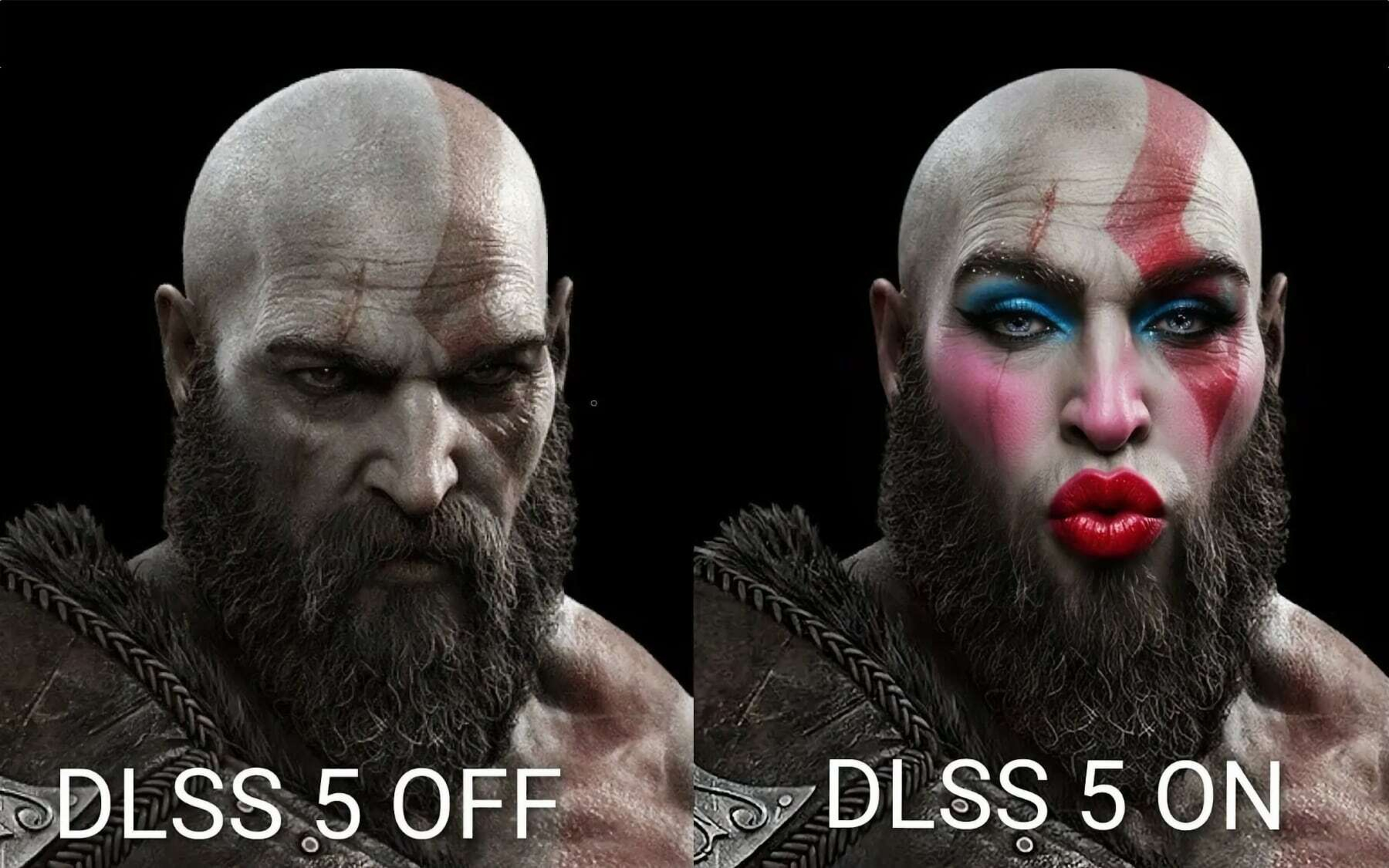
Nvidia just tried to Yassify your favourite games. Nobody asked.
I’m a big fan of The Vergecast. I like their outlook on tech. They, like me, are technology nerds, who have serious questions about the direction that big tech is headed. More though, they keep things fun. Even as the world burns, they’ll take the piss out of the whole thing, rather than relying on foaming-at-the-mouth outrage.
Fine, sometimes there’s foaming-at-the-mouth outrage.
I’ve been watching the NVIDIA DLSS 5 memes flood my Bluesky feed this week and it’s been fun. It also caught the attention of Nilay Patel and David Pierce on The Vergecast this Friday. It was a compelling conversation that was a fair description of what is going on with the tech, while noting how terribly NVIDIA, including CEO Jensen Huang, had handled the launch and blowback.
What DLSS 5 actually does
In the simplest terms, your graphics card renders at a lower res, then the DLSS (Deep Learning Super Sampling) technology, upscales the graphics. Until DLSS 5, it helped developers improve the performance of their games without changing how anything looked or felt. It was a clever way to increase the frame rate. DLSS was invisible and useful. Nobody complained.
This latest version changes everything. It changes the look, giving everything an AI slop sheen. NVIDIA demonstrated by taking existing games and making them look “better.” In reality it just looked like weird yassified slop. DLSS 5 is visible and unwanted. Nobody wanted it.
Who asked for this?
As far as I can tell, nobody asked for this. Not game developers, not players. Gamers spend hundreds of hours with these characters and in these scenes. They are emotionally invested. The games have been crafted by talented designers who have spent years honing their skills. Nvidia imposed this on developers’ own games without their knowledge or consent. Capcom and Ubisoft developers had no idea what the demo would look like before the demo went public.
Fans of art and popular culture - film, tv, music, games - will all tell you the same thing. Any remaster has to be true to the original work. It has to be a labour of love, and even then the resulting work might not be successful. It’s a risk. One of the most successful restoration efforts was for Star Trek: The Next Generation. It took years, and every single frame was treated with the utmost respect. Chucking a game through an AI filter is the opposite of that. It’s a zero-effort process and it shows a complete disregard for the original art. As game designer James Brady says, “It devalues an artist’s creativity and intent on a basic level.”
The view from inside the bubble
NVIDIA genuinely thought fans and developers would welcome this. That’s wild. Their brains have been so yassified by an overuse of AI that they are blind to what people think. AI isn’t popular, but people specifically hate it when it encroaches on art. They have lost perspective on what normal people want.
But that’s the point. Nvidia demoed DLSS 5 on two of the most powerful consumer cards on the market, at a conference they call “the Super Bowl of AI.” That’s not about helping people with older hardware run better games. It’s a roid flex.
Jensen Huang telling critics they are “completely wrong” isn’t arrogance, it’s genuine incomprehension. He’s lost his perspective and can’t see the problem. It makes him look unhinged from his market.
The bigger pattern
NVIDIA didn’t need to do this. DLSS could have continued to make visual improvements without changing the look of the work. It was a tool rather than a crutch.
But they jumped in without considering that normal people have a healthy distrust of AI. It’s something that’s been shoved down our throats for the past few years without anyone producing a good product that most find worthwhile. AI is coming for our culture. Nobody asked if we wanted it. Nobody bothered to convince us that it’s a worthwhile option.
Nvidia are the latest in a string of companies that have succumbed to this yassified mindset. And the ones that push hardest are invariably least equipped to think about what fans want.
Sigh.